
The header is whatever covers the top of the window and the roller tube behind it. There are four: an open roll leaves the tube exposed; a fascia is a slim L-shaped cover across the front and underside; a cassette is an enclosed headbox the fabric retracts into; and a cornice is a built box, usually painted wood with returns to the wall. A valance is the soft version — a fabric panel across the top, decorative rather than structural. The cassette and the cornice do the most about the light gap; a valance does the least.
Four ways to finish the top of a window
The four headers, in section
Cut through the head of the window and look sideways. Same shade every time; only the header changes.
| Header | What it is | What it hides | Light gap at the top | Depth needed |
|---|---|---|---|---|
| Open roll | Nothing — the tube and brackets are exposed | Nothing | Wide open | None |
| Fascia | A slim L-shaped cover across the front and underside | The tube, from the room | Reduced | A little |
| Cassette | An enclosed headbox the fabric rolls up into | The tube, front, top and bottom | Meaningfully closed | More |
| Cornice | A built box, usually painted wood, with returns | The tube, the brackets and the track | Closed | Most |
| Valance | A soft fabric panel hung across the top | The hardware, loosely | Little change | Varies |
The light-gap column is the one people have never thought about, and it is the one that decides whether a bedroom works.
We build the wood cornices ourselves
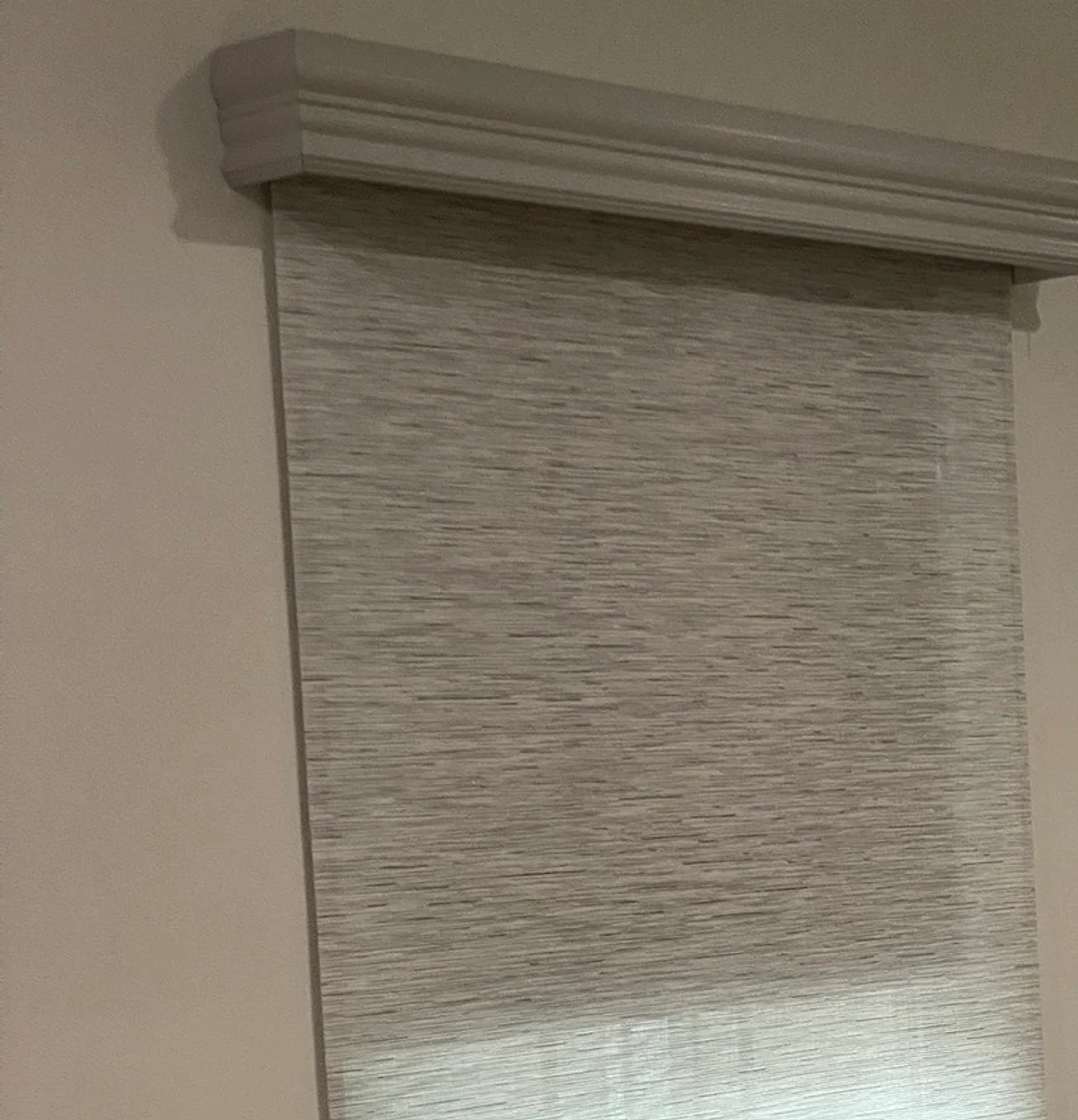
A built, painted wood cornice with proper returns is millwork. It is made to the opening, painted to the trim in the room, and it hides the tube, the brackets and the light gap in one move — which is how you tie a plain modern roller into a room with traditional millwork without either of them looking out of place.
It is also the thing a workroom can do that a catalogue cannot. A cornice is not a stocked part; it is cut, assembled, filled, sanded and painted for one window. We build them here, over 40 years into doing it.
Which one for which room
Bedrooms and nurseries
A cassette or a cornice. The gap over the top of an open roll is exactly the light that wakes somebody at six in the morning, and closing it is worth more than any upgrade to the fabric. More on getting a nursery dark.
Living rooms and sunrooms
Whatever suits the architecture. An open roll disappears in a modern room; a cornice gives a shade the weight to sit under existing millwork; a valance softens a room that is all hard surfaces.
Offices and commercial
Fascia is the clean, repeatable default across a floor — consistent from the street, and one unit can be replaced without rematching a discontinued header. Offices and managed properties.
Should you leave the roller exposed?
Honestly: often, yes. An open roll is the most minimal finish there is and it suits plenty of modern rooms, which is why it is the default. The trade-offs are real though — light over the top, dust settling on the exposed fabric, and visible brackets. In a bedroom or a nursery, where the top gap is precisely what wakes you, we would put something over it. The four compared in more detail.
Headers on a dual shade
Two tubes need a deeper header than one, so on a dual day-night shade the header is part of the design from the start rather than a decision made at the end. A header wide enough for two rolls.
Soft treatments live in the same conversation: a valance is drapery, and it is made the same way and from the same fabrics. See soft valances and drapery, or the roller shade underneath.
Questions people ask
What is the difference between a cornice and a valance?
A cornice is hard — a built box, usually painted wood or upholstered over a frame, with returns to the wall. It reads architectural and it hides the hardware and the light gap above a shade. A valance is soft — a fabric panel, gathered or tailored, hung across the top. It is decorative rather than structural, and it does much less about light.
What is a cassette on a roller shade?
A cassette is an enclosed headbox that the fabric rolls up into, closed on the front, top and bottom. It gives the cleanest modern finish, keeps dust off the roll, and closes the light gap at the top better than an open roll or a front-only fascia. A fascia is the simpler cousin: an L-shaped cover across the front and underside, hiding the tube from the room but not enclosing it.
Can a wood cornice go over a roller shade?
Yes, and it is one of our favourite combinations — the cornice hides the tube and the brackets completely, closes the light gap at the top, and lets the shade be a plain, quiet surface underneath. It is also how you tie a modern roller into a room with traditional millwork.
Have the header decided at the window
Depth, reveal and trim all decide this one, and all three are measured in the room.